This self-study lesson will help you understand and use the expression “bend the rules” like a confident English speaker.
Here’s how to get the most out of it:
Read the short story – Feel the phrase in a real, emotional situation.
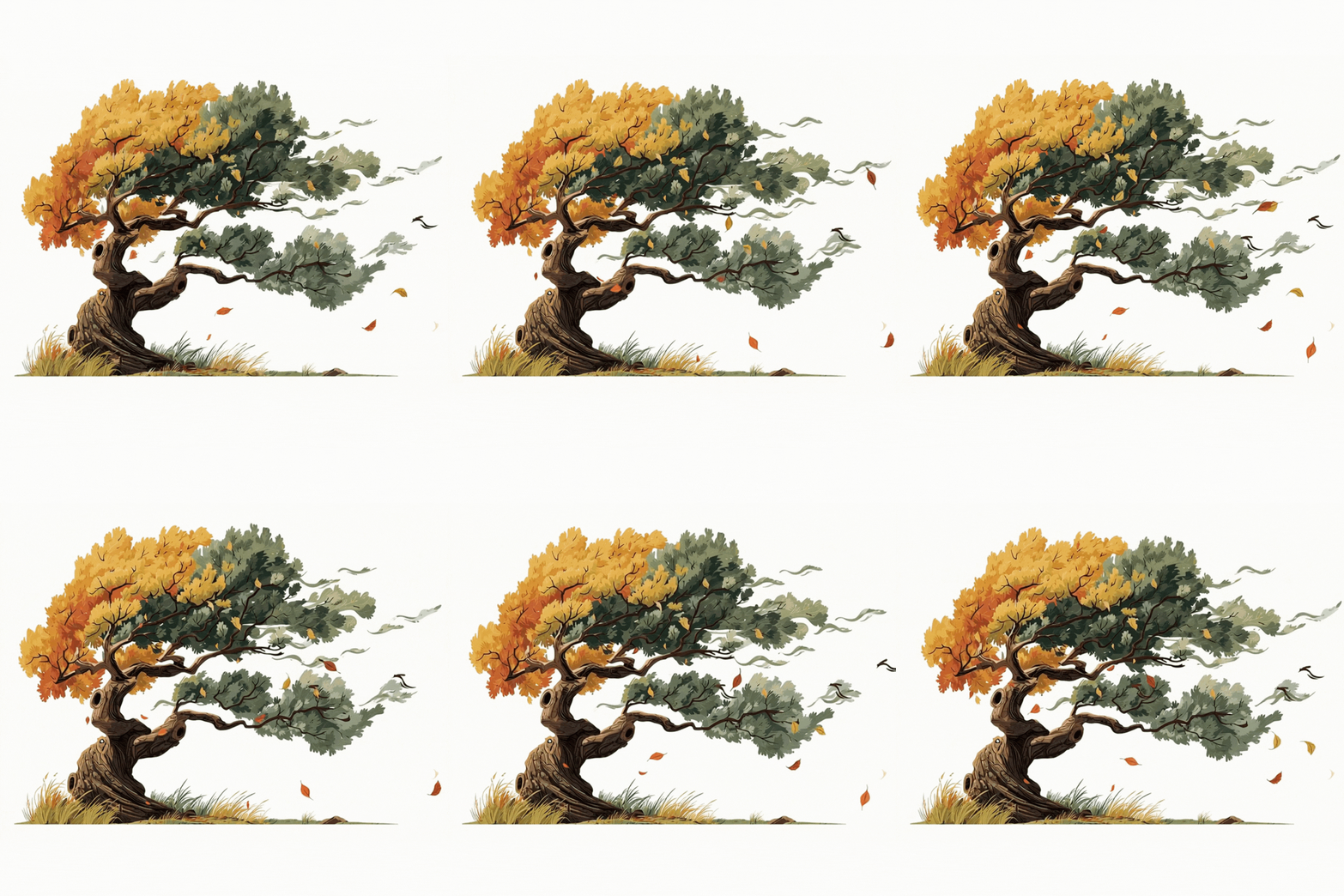
Check the visual – A helpful image makes the meaning clear and memorable.
Learn the difference – See how “bend” and “break the rules” are not the same—and when to use each.
Do the practice quiz – Test yourself with real-life questions and explanations.
Go deeper – Discover how the verb “bend” works in different contexts.
Think for yourself – Reflect with personal questions that bring the lesson into your life.
Let’s jump in!
Bend Without Breaking 🌳
"Sometimes, like this tree, we bend... but we don’t break."
💡 Just like bending the rules, the tree stays flexible without falling apart. In English, to bend the rules means to be a little flexible with them—but not break them completely.
🎬 Before we get started...
When you’re ready, scroll down — I’ve got questions, activities, and insights waiting for you!
🌟 Lead-in Story: "Just This Once"
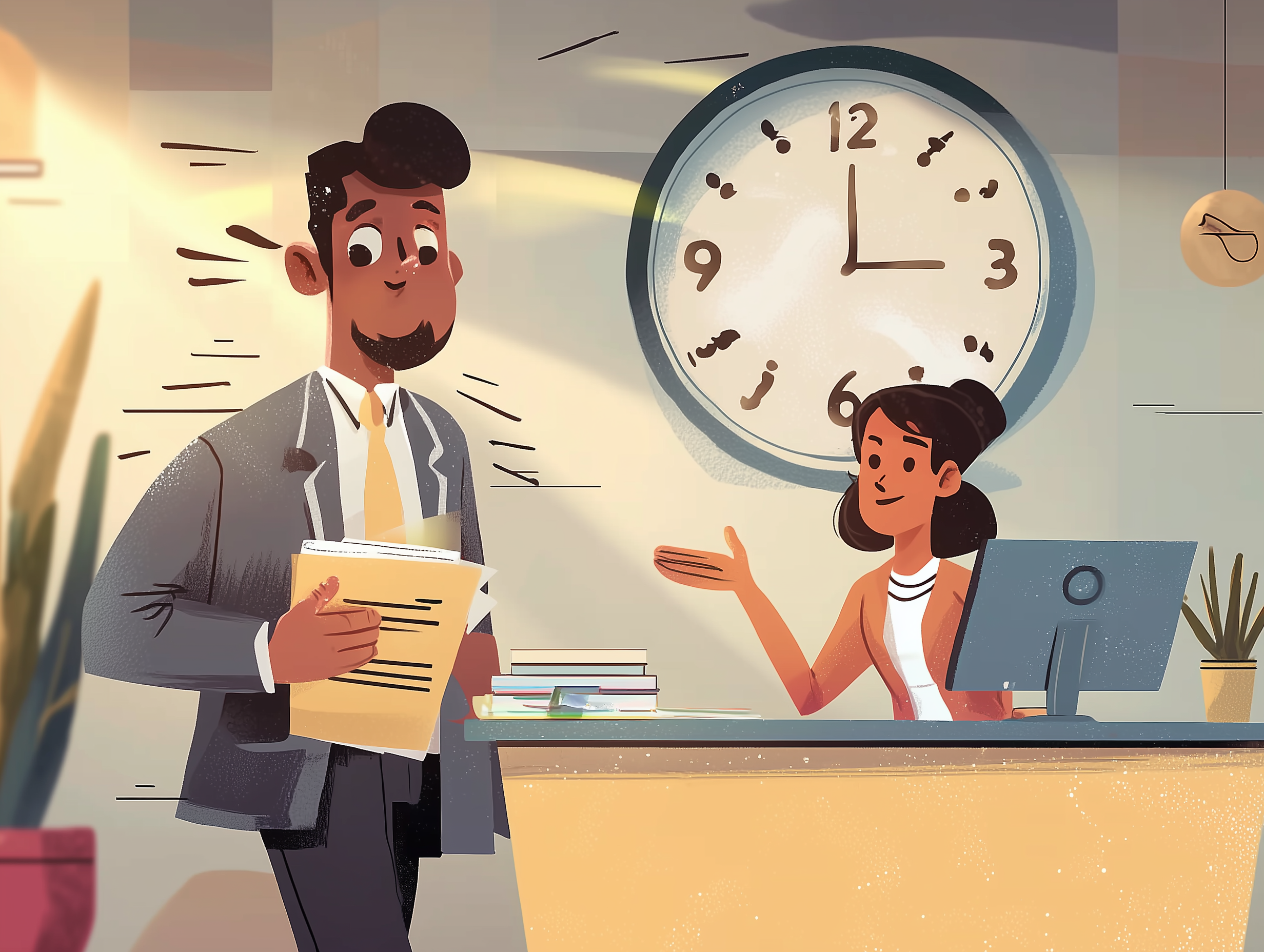
Imagine you're Omar: five minutes late for a crucial job interview, stuck in traffic, heart pounding. Will the receptionist let you in, or will she strictly follow the rules? Let's listen to Omar's story and find out how a simple act of flexibility can change everything.
🎧 First, listen and take notes!
Before reading, click the play button below to listen to the story. Try to understand the main idea and jot down any new words or phrases you hear. Then, use the "CLICK TO READ STORY" toggle to check your understanding and read along!
Omar always follows the rules. Always.
But today was different.
He was five minutes late for his job interview—stuck in traffic, sweating, his tie half-on. He rushed in, heart pounding, ready to explain.
The receptionist smiled.
"You're late," she said.
Omar's face fell.
Then she added, "But… we can bend the rules this time. The manager will still see you."
Later, his best friend said, "See? Not every rule is made to be broken. But some can be bent."
📚 Grammar Reference: Bend vs Break the Rules
💡 What's the difference?
Expression
Meaning
Allowed?
Tone
Bend the rules
Slightly change or relax a rule with permission
Often ✅
Flexible / Human
Break the rules
Disobey or ignore a rule completely
No ❌
Serious / Risky
💬 Examples:
"She bent the rules so I could submit the project a day late."
"He broke the rules by using his phone during the exam."
🧠 Why does this matter?
Because real-life English is full of expressions like this. Using the right phrase shows maturity, accuracy, and confidence.
📝 Practice Quiz
📝 Exercise Instructions
Complete the sentences by typing the correct word in each gap. Choose between "bend" or "break" (and their variations like "bent", "broke", "breaking", "bending").
✅ Green highlighting = Correct answer
❌ Red highlighting = Try again (look for the hint!)
💾 Your answers are automatically saved as you type.
Base Form
Past Simple
Present Continuous
break
broke
is/are breaking
bend
bent
is/are bending
1. My teacher let me redo the test. She decided to the rules for me.
TRY AGAIN
2. He copied his friend's answers. He clearly the rules.
TRY AGAIN
3. The museum normally closes at 5, but today they stayed open late. They the rules.
TRY AGAIN
4. You can't park here, and you know it. You're the rules.
TRY AGAIN
5. She allowed phones in class for research purposes. She the rules.
TRY AGAIN
6. He paid someone to take the test for him. That's the rules.
TRY AGAIN
7. During the storm, the airport let people skip security lines. They were the rules.
TRY AGAIN
8. She used fake documents to get a visa. She the rules.
TRY AGAIN
🤔 Critical Thinking Questions
Can you think of a moment when someone bent the rules for you? How did it make you feel?
Do you think it's ever acceptable to do break the rules? When and why?
Are there rules in your daily life or culture that you think should be more flexible?
What's the danger of bending the rules too often? Can it become the same as breaking them?
Dive Deeper: The Versatile Verb "Bend"
Let’s take a closer look at the verb "bend"—a small word with big flexibility! Just like you can bend your body in yoga or a metal wire with your hands, English lets this verb stretch into many different meanings depending on the situation.
In this self-study activity, you’ll learn how “bend” works in physical, emotional, and even figurative ways. From bending rules to bending your knees, you’ll see how context shapes meaning—just like we shape language.
Ready to flex your vocabulary muscles? Let’s dive in! 💪🧠
🟦 Different Contexts of "Bend" (verb):
Context
Meaning
Example
Physical
Curve/change shape of an object
He bent the metal rod.
Body
Move part of your body
Bend forward at the waist.
Rules/Will
Yield or adapt
The law won’t bend for anyone.
Figurative
Change your opinion, behavior, or decision
He bent under pressure from the media.
Examples of “Bend” in Context (with Explanations)
During yoga class, we learned how to bend our backs gently.
💡 Explanation“Bend” is used in the physical sense—moving the body into a curved position during an exercise.
The strong wind caused the tree to bend but not break.
💡 ExplanationThis is a figurative and literal use. The tree bends (flexes) under pressure but stays intact.
The politician refused to bend to public pressure.
💡 ExplanationHere, “bend” is used metaphorically to mean “give in” or “submit” to demands.
Please bend your knees when lifting heavy objects.
💡 ExplanationIn this context, “bend” is part of a safety instruction related to body movement.
She bent the wire into the shape of a heart.
💡 Explanation“Bent” is the past tense of “bend,” used here to describe changing the physical shape of an object.
He always tries to bend the rules to get what he wants.
💡 Explanation“Bend the rules” is an idiom meaning to slightly break or stretch the rules for personal advantage.
There’s a sharp bend in the road just before the bridge.
💡 Explanation“Bend” as a noun here refers to a curve or angle, especially in roads or paths.
The actor bent down to pick up the award from the stage.
💡 Explanation“Bent down” means lowering the upper body, often used for picking something up or bowing.
🚀 Activate Your English: Apply 'Bend'
📝 Instructions: Apply 'Bend'
Now it's your turn! Read each question and write your answer in the text box. Focus on using the verb "bend" correctly in context. There's no single "correct" answer, but aim for clear, natural English.
Once you've written your answer, click "Compare Your Answer" to see a guiding note. This will help you reflect on your usage.
💾 Your answers are automatically saved as you type.
1. Describe a physical object that you can easily bend. How does it change shape?
Compare Your Answer
Did you use 'bend' in the sense of changing the physical shape of an object?
2. Can you think of a rule in your life (at work, school, or home) that you think should be more flexible, or that someone might need to bend? Explain why.
Compare Your Answer
Did you use 'bend' in the context of rules, meaning to adapt or make an exception?
3. Describe a situation where someone had to bend their will or opinion to reach a compromise.
Compare Your Answer
Did you use 'bend' to mean changing one's opinion, behavior, or decision?
4. When performing a physical activity (like exercise or lifting something heavy), why is it important to bend your knees or back correctly?
Compare Your Answer
Did you use 'bend' in the context of body movement or posture?
5. Have you ever seen a tree or plant bend significantly due to wind or other natural forces, but not break? Describe it.
Compare Your Answer
Did you use 'bend' in a literal sense related to flexibility or resilience?
Confirm Reset
Are you sure you want to reset all answers? This action cannot be undone.